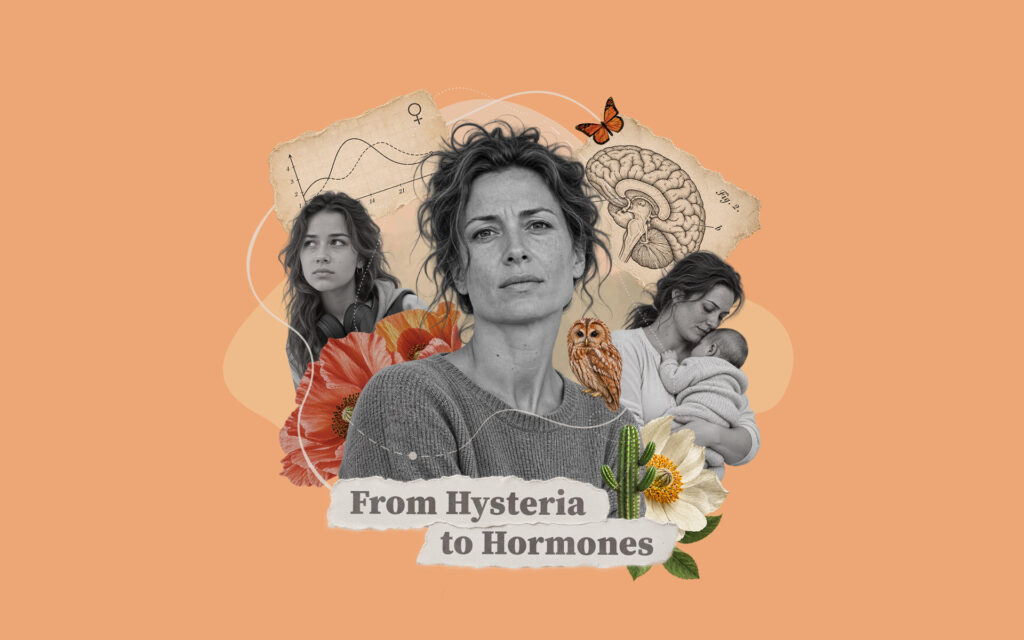
From Hysteria to Hormones

From hysteria to hormones: Why has it taken so long to connect the dots on women’s mental health?

For centuries, women’s emotional distress has been blamed on their reproductive biology, yet we’re only beginning to understand some of the connections between hormonal changes, the brain and mental health across a woman’s life. And the consequences of what we didn’t understand haven’t always ended with the women themselves.

I’ve been reading about the relationship between women’s hormones, brain development and mental health, and what started as a fascinating investigation into the science has turned into something that makes me quite angry.

Not because researchers have discovered that reproductive hormones influence our brains. Considering how long women have been describing changes in mood, sleep, anxiety and emotional wellbeing around their periods, pregnancy and menopause, I can’t say that came as an enormous surprise.

What gets me is that we’ve spent centuries treating women’s hormones as a convenient explanation for their behaviour, while taking considerably longer to understand the biological connections between those hormones, the brain and mental health.

And when you start looking at the history of how women experiencing psychological distress were treated, that gap in understanding becomes rather more difficult to dismiss as an unfortunate quirk of medical progress.

For me, this isn’t entirely an abstract conversation about research or something that happened to women several generations ago.

In 1980, my husband’s mother was admitted to a psychiatric institution following childbirth. She was experiencing postpartum mental health difficulties, at a time when the understanding of these conditions, the treatment available and the support surrounding mothers and babies could look very different from what we recognise today.

Their relationship has never been quite the same.

I don’t pretend to know exactly how things might have unfolded under different circumstances, and I certainly don’t want to suggest that women experiencing severe mental illness after childbirth shouldn’t receive specialist psychiatric care. Sometimes inpatient treatment is essential, particularly when a woman’s safety or wellbeing is at risk.

But I do wonder what her experience might have looked like with the understanding and support available today, and whether things might have been different for both mother and son.

Because that’s the part of medical history that interests me most. We tend to discuss old treatments, changing diagnoses and scientific discoveries as though they belong neatly to the past, but the people who experienced those decisions didn’t simply disappear when medicine moved on.

They went home. They raised families, or tried to. They carried memories, formed relationships and lived with whatever consequences followed, sometimes for the rest of their lives.

And when I look at the research emerging about women’s brains during puberty, pregnancy and perimenopause, I can’t help wondering how many experiences were misunderstood because medicine hadn’t yet connected the dots.

From wandering wombs to hysteria: A rather spectacular history of misunderstanding women

If you want to understand why women’s mental health has so often been treated differently, it’s worth looking at how medicine historically explained women’s emotional and psychological experiences.

And some of those explanations are, frankly, extraordinary.

In ancient Greek medicine, certain symptoms experienced by women were attributed to the uterus, with some writers suggesting that it could move around the body and cause all manner of physical and psychological disturbances.

The idea of the wandering womb sounds like something somebody invented after a particularly enthusiastic evening at the pub, but it was part of an influential tradition of medical thinking that connected women’s reproductive organs with symptoms that physicians struggled to explain.

Over time, the term hysteria, derived from the Greek word for uterus, became associated with an enormous range of symptoms, from emotional distress and anxiety to physical complaints that didn’t fit neatly into the diagnostic categories available at the time.

And here’s where things become uncomfortable, because what was considered hysteria varied considerably across different centuries and medical traditions, with women’s experiences frequently interpreted through prevailing assumptions about femininity, sexuality, reproduction and supposedly unstable emotions.

By the nineteenth century, hysteria had become a familiar psychiatric diagnosis in European medicine, although the way it was understood and treated differed between physicians and institutions.

Some women experienced approaches that would be considered unacceptable today, including coercive confinement and treatments based on assumptions about their behaviour rather than a clear understanding of their condition.

Of course, not every historical diagnosis of hysteria was malicious, and some physicians were genuinely trying to investigate symptoms they didn’t yet know how to explain. We also shouldn’t pretend that every woman described as hysterical was experiencing a hormonal or reproductive mental health condition, because the label covered a vast range of problems.

But the broader history reveals something important about the way women’s psychological experiences were interpreted.

When medicine lacked a clear explanation for certain symptoms, women’s reproductive biology often became a convenient place to put the blame.

And perhaps the most frustrating part is that reproductive biology genuinely does interact with mental health, just not in the simplistic way those historical assumptions suggested.

Which makes me wonder how many useful questions were missed because physicians were so busy deciding what women’s emotions said about their nature.

We’ve been blaming women’s hormones for generations. Understanding them is another matter.

Most of us have encountered some version of the idea that women’s hormones make them emotionally unpredictable.

Teenage girls are moody, pregnant women are overly emotional, and women approaching menopause are apparently expected to become increasingly irrational while simultaneously keeping their families, relationships and workplaces running smoothly.

It’s an interesting arrangement when you think about it.

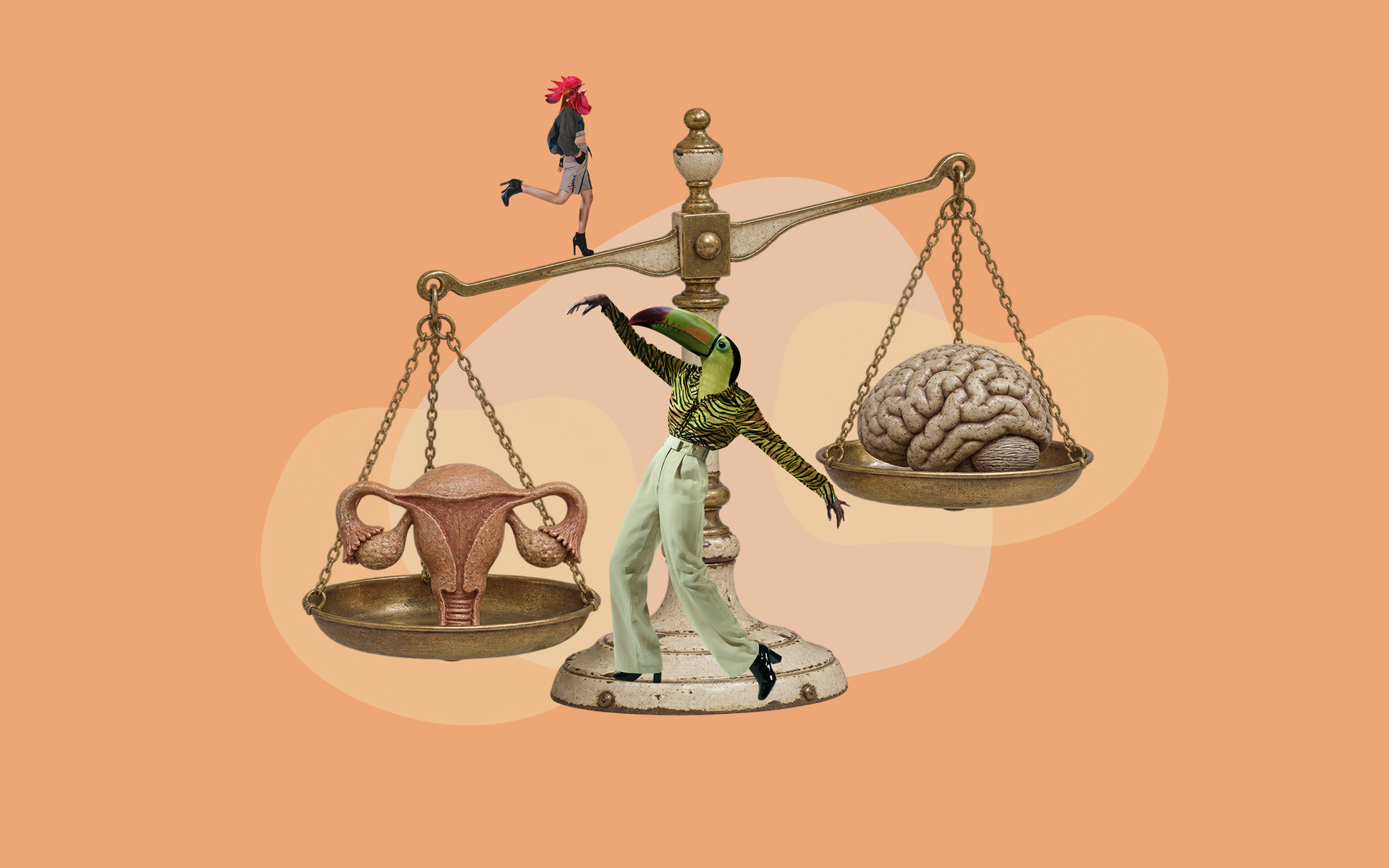
But there’s a rather important difference between using hormones to dismiss someone’s behaviour and investigating how hormonal changes might genuinely affect the brain.

Professor Jayashri Kulkarni, a psychiatrist and researcher at Monash University in Australia, has spent years investigating the relationship between reproductive hormones and women’s mental health, including how changes in oestrogen and progesterone may influence vulnerability to depression.

Her work describes these hormones as neurohormones because their effects extend well beyond reproduction.

Oestrogen interacts with brain systems involved in mood, memory, cognition and stress, while progesterone can be converted into allopregnanolone, a neurosteroid that acts on receptors associated with the brain’s calming system.

In other words, hormones we’ve traditionally discussed in relation to periods, fertility and menopause are also involved in processes that influence how women feel and respond to the world around them.

And researchers are increasingly interested in what happens when those hormones rise, fall or fluctuate dramatically, particularly during three major stages of reproductive life: puberty, pregnancy and the period after childbirth, and perimenopause.

These stages involve different biological processes, and they don’t affect every woman in the same way. But each represents a period when reproductive hormonal changes coincide with important changes in the brain, and research suggests some women may become more vulnerable to mental health difficulties during those transitions.

What’s particularly interesting is the emerging evidence that certain women may be more sensitive to hormonal fluctuations than others.

That could help explain why two women experiencing broadly similar reproductive changes can have completely different psychological experiences, with one feeling relatively unaffected while another develops significant depression or anxiety.

But the relationship isn’t purely hormonal. Previous mental health, genetics, sleep, stress and social circumstances all influence vulnerability, and reproductive hormones may be one part of a considerably more complicated picture.

Which brings me back to the question that’s been bothering me throughout this research.

If these biological connections are so important, why have we spent so long treating puberty, postnatal mental health and menopause as though they belong to entirely separate conversations?

Puberty: The first time girls learn that their feelings are probably just hormones

For many girls, puberty is the first time adults begin explaining their emotional experiences through the language of hormones.

A girl becomes anxious, withdrawn, irritable or unusually tearful and somebody suggests she’s becoming a teenager, which is apparently supposed to explain everything.

But the research suggests puberty is a particularly important period for mental health, and the changes taking place deserve considerably more attention than a dismissive comment about teenage moods.

Before puberty, boys and girls experience depression at relatively similar rates. During adolescence, however, girls become approximately twice as likely to experience depression, and that difference continues into adulthood.

In Britain, researchers involved in the Millennium Cohort Study followed more than 10,000 children born in 2000 and 2001. At 14, they found that 24% of girls reported depressive symptoms, compared with 9% of boys.

That’s a substantial difference, and it raises important questions about why the gap emerges during adolescence.

Another British study, involving more than 2,500 girls from the Avon Longitudinal Study of Parents and Children, found that stages of pubertal development were associated with depressive symptoms at 14, suggesting hormonal changes may contribute to the emerging vulnerability.

Researchers in the Netherlands and Belgium have also investigated how sex hormones interact with brain development and stress-response systems during adolescence, potentially influencing susceptibility to depression.

Now, none of this means girls become depressed simply because they’re producing oestrogen, and I think we’d be making a spectacular mistake if we replaced the old assumption that teenage girls are difficult with a new assumption that every emotional problem is hormonal.

Adolescence also brings social pressures, body image concerns, bullying, family difficulties and all the complications of trying to work out who you are while everybody around you seems to have an opinion about it.

Those experiences matter enormously, and the research suggests they interact with biological development rather than existing separately from it.

But understanding that puberty can be a period of increased vulnerability might help us take girls’ mental health more seriously, particularly when symptoms are persistent or begin affecting everyday life.

Because a teenage girl experiencing depression doesn’t need to be told she’s hormonal as though that explains why nobody needs to listen.

She needs somebody to recognise that something may be happening which deserves proper attention.

Pregnancy: The brain changes we used to call baby brain

Pregnancy is another stage where women’s cognitive and emotional experiences have been discussed with an impressive amount of casual confidence, particularly considering how recently researchers have begun examining the changes involved in detail.

Most of us are familiar with the term baby brain, usually used when a pregnant woman forgets something or struggles to concentrate, as though growing another human being has temporarily rendered her incapable of remembering where she put her keys.

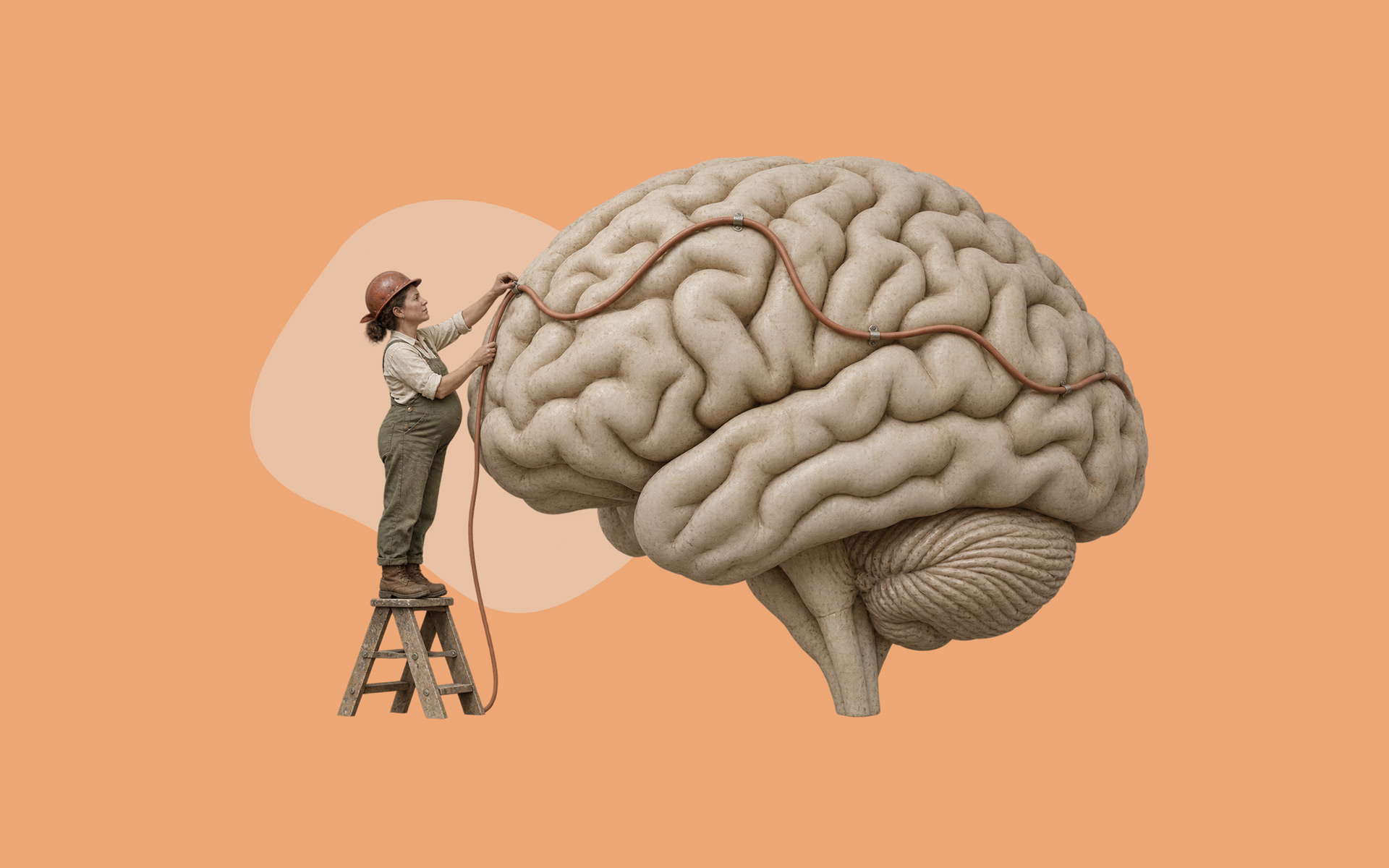
But researchers studying pregnancy have identified measurable changes in brain structure, some of which appear to be associated with adaptation to motherhood.

One of the landmark studies came from neuroscientist Elseline Hoekzema and colleagues working in Spain and the Netherlands.

The researchers scanned women’s brains before and after their first pregnancies and found reductions in grey matter in regions associated with social cognition, including the ability to understand other people’s thoughts and feelings.

I know reduced grey matter sounds alarming, particularly if you’re imagining pregnancy somehow shrinking women’s intelligence, but that wasn’t what the researchers found.

The changes appeared in regions involved in responding to babies, persisted for at least two years and weren’t associated with measurable declines in memory or general cognitive ability.

The researchers interpreted the findings as potentially adaptive, suggesting that pregnancy may involve neurological changes that help mothers respond to their babies’ needs.

In 2024, another research team followed one woman’s brain through pregnancy using repeated scans, observing widespread changes in grey matter alongside temporary changes in white matter integrity.

The findings offered a detailed glimpse into how the adult brain can change during pregnancy, although studying one woman in such depth doesn’t mean we can assume every pregnancy follows precisely the same pattern.

Still, I find the broader implications fascinating.

For years, we’ve been making jokes about pregnancy making women forgetful, while researchers are discovering that pregnancy may involve sophisticated neurological adaptations associated with caring for another human being.

And while those changes aren’t proof that every aspect of pregnancy-related forgetfulness serves some important evolutionary purpose, they do challenge the assumption that changes in women’s brains necessarily represent something being lost.

But pregnancy is only part of the story.

Because after months of extraordinary hormonal changes, childbirth brings another dramatic transition.

And for some women, that transition can be devastating.

After childbirth: When mental illness was treated, but mothers and babies sometimes paid a terrible price

During pregnancy, oestrogen and progesterone rise to exceptionally high levels, supported by the placenta. After birth, those levels fall sharply, alongside changes in allopregnanolone, the neurosteroid involved in regulating the brain’s response to stress and calming activity.

Researchers believe sensitivity to these changes may help explain why some women become vulnerable to depression or anxiety following childbirth, although sleep deprivation, previous mental health difficulties, trauma, social support and other factors also matter enormously.

This is important because the hormonal change is part of normal childbirth, yet women respond differently.

Some experience relatively mild emotional changes, while others develop serious conditions that require professional treatment.

And historically, the way those conditions were understood and managed could have profound consequences for mothers and their families.

Which brings me back to my husband’s mother.

When she was admitted to a psychiatric institution in 1980, the medical understanding of postnatal mental health was very different from what we know today, and specialist approaches designed to support mothers while preserving relationships with their babies weren’t available equally across Europe.

Britain had already begun developing mother-and-baby psychiatric units during the twentieth century, recognising the importance of treating severe maternal mental illness without automatically separating women from their infants.

But services varied considerably, and across different countries and institutions, psychiatric admission could still involve separation from babies, sometimes during a period when both mother and child were especially vulnerable.

I don’t know every detail of what happened during my husband’s mother’s admission, and I wouldn’t pretend to know whether the care she received was appropriate for her condition or what alternatives were available at the time.

But I do know that their relationship has never been the same, and I can’t help thinking about how those early experiences can become part of a family’s history long after the original medical episode has ended.

It’s important to recognise that postpartum depression and postpartum psychosis are different conditions, and severe psychiatric illness following childbirth can require urgent treatment, including hospital admission.

The issue isn’t whether women should have received psychiatric care. It’s whether that care understood the importance of the mother-infant relationship, whether appropriate support was available and how treatment decisions affected the family beyond the immediate crisis.

Modern mother-and-baby psychiatric services attempt to address precisely that challenge, providing specialist treatment while supporting bonding and caregiving where clinically appropriate.

And the emerging research into reproductive hormones gives us another way to understand why this period can create such significant vulnerability for certain women.

Instead of interpreting severe postnatal distress as a personal failing or evidence that someone wasn’t suited to motherhood, researchers are investigating the biological and psychological processes that may contribute to these conditions.

The work on allopregnanolone has even contributed to the development of medications specifically designed to treat postnatal depression in some countries.

That’s a remarkable shift in understanding.

But I keep coming back to the women who experienced earlier approaches, and the families who have lived with the consequences.

Because advances in medical knowledge don’t undo what happened before them.

And the effects of a difficult or traumatic experience around childbirth can become part of a relationship for years afterwards.

Perimenopause: Another transition, another opportunity to misunderstand women

By the time women reach their forties, many have already navigated decades of hormonal changes, established careers, raised families or built lives that require an extraordinary amount of practical and emotional energy.

And then perimenopause arrives, sometimes bringing unfamiliar anxiety, changes in mood, disrupted sleep, difficulty concentrating or feelings that don’t seem to match the person they’ve known themselves to be.

Of course, midlife can also bring significant stress, relationship changes, caring responsibilities and other pressures that have nothing to do with reproductive hormones.

Which makes it especially important that healthcare professionals don’t simply assume every emotional difficulty in a woman’s forties is caused by menopause.

But the research suggests the hormonal transition itself may be associated with increased vulnerability to depression for some women.

In 2024, researchers at University College London published a meta-analysis involving more than 9,000 women and found that those in perimenopause had approximately a 40% higher risk of depressive symptoms and depression diagnoses compared with premenopausal women.

Interestingly, the researchers didn’t find a statistically significant increase among postmenopausal women compared with women who hadn’t yet entered menopause.

That suggests the transition may be particularly important, rather than simply the lower hormone levels that follow it.

Other research paints a more complicated picture.

A 2024 review published in The Lancet found that depression risk doesn’t rise universally for all women during menopause, with vulnerability appearing more pronounced among those with previous depression, severe menopausal symptoms, sleep disruption or significant life stress.

The researchers also cautioned against attributing all midlife depression to menopause, because doing so can delay recognition of other medical or psychological causes.

And I think that’s where we need to be particularly careful.

Women have spent generations being told that their emotional experiences are probably hormonal, often as a way of dismissing what they’re saying.

The answer isn’t to start blaming every episode of depression or anxiety on perimenopause.

It’s to understand when hormonal changes may be contributing, while still investigating the full picture.

Because women deserve more than being told their feelings are simply part of getting older.

They deserve a proper explanation of what’s happening and what might help.

And the brain itself appears to be adapting

The research into menopause and brain structure is particularly interesting because it challenges the assumption that hormonal changes necessarily represent an irreversible decline.

In 2021, neuroscientist Lisa Mosconi and colleagues examined brain structure, connectivity and energy metabolism in women across different menopause stages.

They found changes in grey matter, white matter and brain glucose use during the transition, with patterns that differed from those observed in age-matched men.

Importantly, several measures appeared to stabilise after menopause, and some brain regions showed evidence of recovery or adaptation.

The researchers suggested that menopause may involve a period of neurological transition followed by a new stage of stability.

That doesn’t mean every woman experiences the same changes, or that persistent cognitive or psychological symptoms should automatically be dismissed as something that will eventually settle.

But it does suggest that the brain may be responding to a changing hormonal environment rather than simply deteriorating.

And when you consider the research into puberty and pregnancy alongside these findings, a broader picture begins to emerge.

Women’s brains are not static structures that remain unchanged while reproductive hormones rise and fall around them.

They are responsive to those hormonal transitions, sometimes adapting in remarkable ways and sometimes, for vulnerable individuals, becoming more susceptible to mental health difficulties.

Which brings us to the part of the research that I find most extraordinary.

What if these experiences were never entirely separate?

For years, we’ve tended to discuss premenstrual mood problems, postnatal depression and perimenopausal mental health as though they belong to entirely different medical conversations.

They’re associated with different life stages, often involve different healthcare professionals and may be separated by decades.

But researchers are beginning to investigate whether certain women have an underlying vulnerability to changes in reproductive hormones that becomes apparent at more than one point in their lives.

A Danish register study involving more than 270,000 women found that those with a history of postnatal depression were substantially more likely to receive a depression diagnosis during perimenopause.

The reported rate was nearly 13 times higher among women with previous postnatal depression compared with those without a history of depression.

That doesn’t mean postnatal depression causes perimenopausal depression, or that women who experience one are destined to experience the other.

Previous depression is itself an important risk factor for future episodes, and large observational studies can’t establish that hormones alone explain the connection.

But the association is striking.

Researchers in Sweden have also identified links between premenstrual disorders and later depression and anxiety, contributing to the growing interest in how reproductive mental health experiences may be connected across a woman’s life.

And I can’t help thinking about what this might mean for the way women are assessed.

If someone experienced severe premenstrual mood symptoms in her twenties, postnatal depression in her thirties and then unfamiliar anxiety or depression during perimenopause, how often would anyone ask whether those experiences might be connected?

Would a doctor treating her at 48 ask what happened after her children were born? Would somebody investigating postnatal depression consider whether she’d previously experienced significant mood changes around her menstrual cycle?

Or would each episode be treated as a completely separate problem, belonging to a different stage of life, without anyone stopping to look for a pattern?

I don’t know how often those questions are currently being asked across different healthcare systems, and I wouldn’t suggest that identifying a pattern would automatically reveal a diagnosis or prevent future mental illness.

But surely understanding a woman’s reproductive mental health history could offer useful information when assessing what she’s experiencing now.

And when I think about the history of women’s psychiatric treatment, I find it remarkable that we’re only beginning to investigate these connections in such depth.

We’ve spent so long categorising women’s emotional experiences according to their reproductive stage, yet some of the most interesting research suggests we may need to examine how those experiences relate to one another.

The danger of getting too excited about hormones

There’s one thing I want to be careful about here, because I think the history of hysteria gives us an important warning about what happens when medical explanations become too convenient.

We shouldn’t respond to emerging evidence about reproductive hormones and mental health by deciding that every psychological difficulty women experience must have a hormonal cause.

That would simply be replacing an old oversimplification with a more scientifically sophisticated version of the same problem.

Women can experience depression, anxiety, trauma and other mental health conditions for many reasons, and the biological influence of hormones doesn’t make those experiences any less real or reduce them to reproductive symptoms.

It’s also worth remembering that many women move through puberty, pregnancy and menopause without developing significant mental health disorders.

The research isn’t suggesting that women’s brains are inherently unstable or that female reproductive biology makes women psychologically fragile.

What it suggests is that reproductive transitions can influence vulnerability, and that some women may be more sensitive to those changes than others.

That distinction matters because the goal should be better understanding and more appropriate care, not another generation of women being told their feelings are simply the result of their hormones.

And we also need to be realistic about what the research can currently tell us.

Brain imaging studies can identify patterns of structural or functional change, but they don’t provide a simple explanation for every emotional experience.

Observational studies can reveal associations between different reproductive stages, but they can’t necessarily tell us exactly why those associations exist.

And while hormone-based treatments are being investigated for certain reproductive mood conditions, the evidence remains limited in some areas, particularly when it comes to using oestrogen specifically to treat perimenopausal depression.

There’s still a great deal researchers don’t know.

But the growing evidence is helping clinicians ask more useful questions, and that alone feels like progress.

What I wish we’d understood earlier

I don’t think it’s fair to suggest that earlier generations of doctors should somehow have known everything modern neuroscience is beginning to reveal.

Medical knowledge develops over time, technology changes what researchers can investigate, and some questions simply weren’t possible to answer with the tools available decades ago.

But I do think we can examine the assumptions that influenced how women’s mental health was interpreted and treated, particularly when those assumptions led to women’s experiences being dismissed, misunderstood or reduced to stereotypes about their reproductive biology.

And I think we need to consider what that history means for women seeking care today.

If a teenage girl is experiencing persistent anxiety or depression, those symptoms deserve proper assessment rather than being brushed aside as puberty.

If a woman develops significant emotional difficulties during pregnancy or after childbirth, she deserves treatment that considers her health, safety and the needs of her family, without shame or judgement.

And if a woman approaching menopause begins experiencing unfamiliar depression, anxiety or changes in mood, she deserves an investigation that considers reproductive hormone changes alongside her mental health history and other possible explanations.

The emerging research also suggests that previous reproductive mental health experiences may be worth discussing, even when they happened years earlier.

A history of significant premenstrual symptoms, postnatal depression or previous depressive episodes could provide useful context when clinicians are trying to understand what’s happening during perimenopause.

That doesn’t mean every woman needs extensive testing or specialised treatment, and a routine hormone blood test won’t necessarily explain complex mental health symptoms.

But it does mean we might benefit from treating women’s reproductive and psychological histories as connected parts of their healthcare, rather than isolated events that belong to completely different stages of life.

And perhaps most importantly, women deserve to have their accounts of those experiences taken seriously.

Because the person living through the symptoms may not know exactly what’s causing them, but she can often tell you when something has changed.

That should be the beginning of an investigation, not the end of the conversation.

The part I can’t stop thinking about

I keep coming back to my husband’s mother and what happened in 1980, partly because it’s impossible to look at the history of women’s mental health without thinking about the people who lived through it.

I don’t know whether a different approach would have changed the course of her illness, and I wouldn’t want to romanticise the idea that severe postpartum mental health conditions could simply have been managed with more kindness or better understanding.

Sometimes psychiatric care is essential, and women experiencing serious mental illness deserve treatment that is effective, compassionate and safe.

But I do wonder about the support that might have been available to her under different circumstances, what the experience meant for her and her baby, and how much of their subsequent relationship was shaped by something neither of them had chosen.

Because when we talk about progress in medicine, it’s easy to focus on the discoveries, the new treatments and the studies that eventually change clinical practice.

What’s harder to measure is the impact on the people who were treated before those advances became available.

And that, to me, is why understanding the connections between puberty, pregnancy, perimenopause and women’s mental health matters so much.

We’re not simply collecting interesting facts about the female brain or discovering new reasons to blame women’s emotions on hormones.

We’re beginning to identify patterns that may help us understand vulnerability more clearly, recognise when women need support and ask questions that previous generations of medicine may never have considered.

For centuries, women’s emotional experiences have been interpreted through assumptions about their reproductive biology, sometimes with consequences that reached far beyond the individual woman.

Now we’re developing the tools to investigate those connections properly, and perhaps the most important thing we can do is make sure that better understanding leads to better care.

Because being told you’re hormonal is not the same thing as having your mental health understood.

And after centuries of confusing the two, I think women deserve considerably better.

FAQs

How are women’s hormones connected to mental health?

Oestrogen and progesterone influence brain systems involved in mood, stress, sleep and emotional regulation. Changes in these hormones may affect mental health during puberty, pregnancy, after childbirth and perimenopause, particularly in women who are more sensitive to hormonal fluctuations. However, mental health is also influenced by genetics, previous experiences, stress, sleep and social circumstances, so hormones are rarely the whole explanation.

Why are puberty, pregnancy and perimenopause important for women’s mental health?

These are periods of significant reproductive hormonal change, and research has identified associated changes in brain development, structure and function. Studies also suggest increased vulnerability to certain mental health difficulties during these transitions, although most women do not develop a significant psychiatric disorder. The biological processes involved differ between stages, and individual experiences vary considerably.

Were women historically diagnosed with hysteria because of their hormones?

Historically, hysteria was a broad medical diagnosis used to describe many physical and psychological symptoms, often interpreted through assumptions about women’s reproductive organs and emotional nature. It wasn’t based on modern evidence about hormonal changes and brain function. Some symptoms labelled as hysteria may have had neurological, psychological or other medical causes, but it isn’t possible to retrospectively diagnose the women involved.

How was postnatal depression treated in the past?

Treatment varied widely depending on the country, the period and the severity of the condition. Women experiencing serious psychiatric illness after childbirth could be admitted to psychiatric hospitals, and in some circumstances admission involved separation from their babies. Mother-and-baby psychiatric units developed during the twentieth century to allow appropriate inpatient treatment while supporting the mother-infant relationship. Postnatal depression and postpartum psychosis are different conditions and require different assessments and approaches to treatment.

Does having postnatal depression increase the risk of depression during perimenopause?

Research suggests there is a strong association. A large Danish study found that women with a history of postnatal depression were substantially more likely to receive a depression diagnosis during perimenopause. This doesn’t mean later depression is inevitable or that reproductive hormones explain the entire relationship, but previous mental health experiences may provide valuable information when assessing symptoms during menopause.

Can menopause cause depression or anxiety?

Perimenopause can be associated with increased vulnerability to depression and anxiety in some women, particularly those with previous mental health difficulties, severe menopausal symptoms or disrupted sleep. A 2024 University College London meta-analysis found that perimenopausal women had approximately a 40% higher risk of depressive symptoms and depression diagnoses compared with premenopausal women. However, that doesn’t mean every woman will experience mental health problems during menopause, or that hormones are necessarily responsible for every episode of anxiety or depression.

Does pregnancy permanently change a woman’s brain?

Research from Spain and the Netherlands has identified measurable structural changes in women’s brains during pregnancy, some of which remain detectable for at least two years after childbirth. These changes appear to involve areas associated with social cognition and may reflect adaptations that help mothers respond to their babies’ needs. Importantly, the researchers didn’t find evidence that these structural changes caused a loss of intelligence or general cognitive ability, and scientists are still investigating how these changes vary between women and over time.

Can a woman’s mental health during puberty predict problems later in life?

Researchers are increasingly investigating whether sensitivity to reproductive hormone changes may contribute to mental health difficulties at different stages of life. Studies have found associations between premenstrual disorders and later depression or anxiety, while other research has identified connections between postnatal depression and depression during perimenopause. However, experiencing mental health difficulties during puberty doesn’t automatically mean a woman will develop postnatal or perimenopausal depression. These findings identify possible patterns of vulnerability, not an inevitable progression.

Why are researchers only now discovering these connections?

Scientists have investigated relationships between reproductive hormones and mental health for decades, but advances in brain imaging, large population studies and reproductive psychiatry are allowing researchers to examine these connections in greater detail. Historically, women’s psychological symptoms were sometimes interpreted through assumptions about reproductive biology without adequate evidence, while different reproductive stages were often investigated separately. Modern research is helping scientists explore whether experiences during puberty, pregnancy and perimenopause share certain biological vulnerabilities.

Can hormone blood tests identify hormone-related depression?

A single hormone blood test generally cannot establish whether depression or anxiety is caused by reproductive hormone fluctuations, particularly during perimenopause when hormone levels can change considerably over short periods. Healthcare professionals need to consider a woman’s symptoms, medical and mental health history, reproductive stage and other possible causes. Blood tests may be useful for investigating certain medical conditions, but they don’t provide a complete picture of how an individual’s brain responds to hormonal changes.

What should I do if my mental health changes during pregnancy, after childbirth or perimenopause?

Persistent depression, anxiety or significant changes in mood deserve professional attention, particularly when they begin affecting sleep, relationships, work or everyday functioning. It can help to keep a record of symptoms and tell your healthcare professional about previous mental health experiences, including premenstrual difficulties or postnatal depression, even if they occurred years earlier. Treatment depends on individual circumstances and may include psychological therapies, medication, specialist support or other appropriate interventions. You don’t need to wait until symptoms become overwhelming before asking for help.

Research and references

  1. Badawy Y, Desai R, et al. The risk of depression in the menopausal stages: A systematic review and meta-analysis. Journal of Affective Disorders, 2024.
  2. Promoting good mental health over the menopause transition. The Lancet, 2024.
  3. Kulkarni J. Depression: A major challenge in the menopause transition. Medicine Today.
  4. Hoekzema E, et al. Pregnancy leads to long-lasting changes in human brain structure. Nature Neuroscience, 2017.
  5. Pritschet L, et al. Neuroanatomical changes observed over the course of a human pregnancy. Nature Neuroscience, 2024.
  6. Mosconi L, et al. Menopause impacts human brain structure, connectivity, energy metabolism, and amyloid-beta deposition. Scientific Reports, 2021.
  7. Joinson C, et al. Association between pubertal development and depressive symptoms in girls from a UK cohort. Psychological Medicine.
  8. University College London Centre for Longitudinal Studies. One in four girls is depressed at age 14. Millennium Cohort Study findings, 2017.
  9. Naninck EFG, Lucassen PJ, Bakker J. Sex differences in adolescent depression: Do sex hormones determine vulnerability? Journal of Neuroendocrinology, 2011.
  10. Danish population register study, published in Maturitas, 2022, examining associations between postnatal depression and perimenopausal depression.
  11. Zhou J, et al. Research on associations between premenstrual disorders and psychiatric disorders. JAMA Network Open.
  12. Research overview on allopregnanolone and reproductive psychiatry, including hormonal changes following childbirth.
  13. Historical medical and psychiatric literature concerning hysteria and the development of mother-and-baby psychiatric services.

This article is intended for general health education and does not replace individual medical or mental health advice. If you’re experiencing persistent depression, anxiety or significant emotional distress, seek support from an appropriate healthcare professional. If you or someone else is in immediate danger, contact your local emergency service or crisis support organisation.


Did you like this article?

0
0

Meet the Author

Tasch Turner has spent more than two decades working in women’s healthcare as a psychology-qualified copywriter and marketing consultant. She helps women make sense of complicated symptoms, conversations, and medical systems – without being talked down to. After being dismissed and told she was overreacting, she’s committed to making sure other women don’t second-guess themselves into silence. Her writing is direct, evidence-informed, and designed for women who want answers.
Share this article on Social Media:

Facebook
Twitter
LinkedIn
Email

Share your Story

Leave a Reply

No Taboo Mom is a place of kindness. We believe shared narrative brings people together and leads to a positive cultural shift. Therefore, we encourage you to share your stories with others.
Please notice, the submission of illegal, harassing, hateful or hurtful comments will be deleted from our blog in order to protect our readers and writers. Be kind.

No Taboo Mom is a place of kindness.

At No Taboo Mom we believe shared narrative brings people together and leads to a positive cultural shift. Therefore, we encourage you to share your stories with others.

Please notice, the submission of illegal, harassing, hateful or hurtful comments will be deleted from our blog in order to protect our readers and writers. 
 
Be kind.